
The Continent That Cannot Decide
Europe agrees that the war is a problem. It cannot agree on anything else.

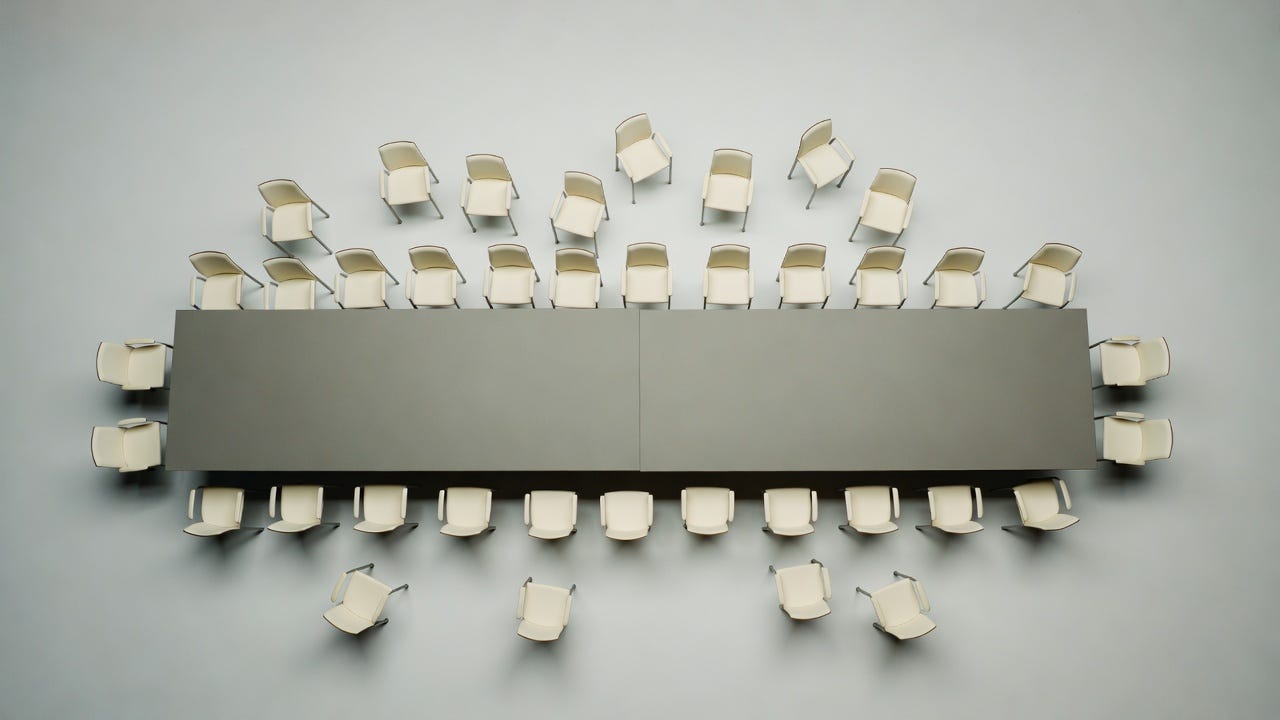
The European Union has 27 member states. On the US-Israeli war against Iran, they have formed three separate blocs, produced two contradictory foreign policy voices, refused a direct request from Washington, and are now debating whether to abandon three years of energy sanctions on Russia. EU leaders are meeting in Brussels today. The agenda is packed. The consensus is not there.
This is not simply a disagreement about a war happening elsewhere. It is a stress test of whether the EU can function as a coherent political actor when its members face genuinely different threats, different energy dependencies, and different domestic political pressures simultaneously. The answer, so far, is instructive.
Three Blocs, One Pattern
The dividing lines among EU member states follow a logic that is more predictable than it first appears.
The first group, Germany, the Netherlands, the Baltic states, the Czech Republic, and Poland, is offering Washington political and diplomatic cover without committing forces. German Chancellor Friedrich Merz said he felt relief that the Iranian regime was coming to an end. He told Trump at the White House that they were on the same page. The Netherlands’ foreign minister argued that international law is not the only framework through which to view the strikes. None of these countries are willing to fight. Merz made that explicit: Germany is not part of this war. The logic of this bloc is straightforward. Iran supplied drones to Russia. It was approaching nuclear capability. If the regime falls, Moscow loses a significant partner. For countries that live under the shadow of Russian military pressure and depend on Washington for their security, this is not a difficult calculation. You do not pick a fight with your security guarantor over a war in a country that was arming your primary threat.
The second group, France, Italy, Greece, and the United Kingdom, has taken a more complicated position: legally critical, militarily present. Macron called the operation outside international law and simultaneously dispatched the Charles de Gaulle and eight warships to the Eastern Mediterranean. Italian Prime Minister Meloni told the Senate the strikes were outside the framework of international law and then sent a frigate and air defense systems to protect Gulf partners and Cyprus. This is not incoherence. It is a deliberate dual positioning: maintain rhetorical commitment to the rules-based order for domestic and diplomatic purposes, while protecting concrete interests on the ground. Shipping routes, military bases, regional relationships. Macron has an additional calculation. With roughly a year left in office and minimal domestic political capital, foreign and defense policy are the areas where the French president retains full constitutional authority. He is using this crisis to cement his legacy as the figure who pushed Europe toward genuine strategic autonomy. The Iran war is as much about Macron’s political positioning as it is about Iran.
The third group, Spain, Austria, Ireland, and Malta, opposes the war outright. Spanish Prime Minister Sánchez has been the most vocal critic in Europe. He called the strikes unjustified, banned US forces from using the Rota and Morón air bases, pulled Spain’s ambassador from Israel, and drew an explicit parallel to the 2003 Iraq War, which destroyed a Spanish government. Trump responded with threats to cut off all trade with Spain. Sánchez’s position is driven by left-populist domestic politics, but it is also enabled by a structural fact: Spain’s large renewables sector gives it some of the cheapest electricity in Europe, which means the energy shock from the Hormuz closure hits Madrid less hard than it hits Rome or Berlin. When the economic pain is lower, the political room to oppose the war is wider. That is not coincidence. It is energy policy as foreign policy. The member states cannot agree because their situations are genuinely different. What makes that worse is that the institution sitting above them cannot agree either.
The Leadership Vacuum at the Top
The war has also exposed a structural fault line inside the EU’s own institutions. The High Representative for Foreign Affairs, Kaja Kallas, is the official designated by EU rules to coordinate European foreign policy. The Commission President, Ursula von der Leyen, has more visibility, more resources, and more political weight. When a crisis hits, the Commission president can simply step in and set the tone, regardless of what the rules say. That is what happened here.
Von der Leyen backed a credible transition of power in Iran, which is regime change language, without any member state authorizing her to do so. She said no tears shed for the Iranian regime. Kallas said this is not the EU’s war, called for full respect of international law, and proposed a UN-brokered arrangement modeled on the Black Sea grain corridor to keep civilian ships moving through the Strait of Hormuz. On March 18, she called Iran’s foreign minister directly. Von der Leyen’s office had no involvement.
Two of Europe’s top officials are saying opposite things to the same audience at the same time. For Washington, Tehran, and every other capital trying to understand what Europe wants, this does not project division. It projects irrelevance. A political actor that cannot speak with one voice on a war of this magnitude is not a serious participant in the diplomacy around it. The High Representative role was created precisely to prevent this. It has not prevented it. The institutional design assumed that political weight would follow formal authority. It does not. It follows visibility and resources. Von der Leyen has both. Kallas has the title.
The Hormuz Test
The clearest measure of where Europe actually stands came on the Hormuz question. In mid-March, Trump asked allies to send warships to help reopen the strait. Every EU member state said no. Germany’s defense minister questioned what a handful of European frigates could do that the US Navy cannot. The Netherlands called it very difficult in the short term. Spain rejected it outright. Greece said it would not engage in any military operations in the Strait of Hormuz. After the March 16 Foreign Affairs Council, Kallas confirmed there was no appetite to expand the EU’s Aspides naval mission from the Red Sea into the Persian Gulf.
Trump did not take the refusal quietly. He went on Truth Social and said the US does not need help from anyone. He called Starmer no Churchill and said Macron will be out of office very soon. He warned that the refusal would be very bad for the future of NATO.
The EU is now caught between two unacceptable outcomes. Saying no to Washington damages a relationship it cannot afford to lose. Saying yes means joining a war none of its member states voted to enter. Macron attempted to split the difference with a proposal for a defensive-only escort mission involving France, India, the Netherlands, Italy, and Greece, but only when circumstances permit. In practice that means after the fighting stops. The G7 endorsed the idea. No ships have moved.
The Energy Fault Line
Beneath the political divisions lies an economic one that is harder to manage. The Hormuz closure has produced the worst energy supply disruption since the 1970s. Brent crude has moved from 72 to 106 dollars a barrel. European natural gas prices on the Dutch TTF benchmark nearly doubled to 60 euros per megawatt-hour after Iranian drones struck Qatar’s Ras Laffan LNG terminal and QatarEnergy declared force majeure on all shipments. Europe’s gas storage was already at a five-year low entering the crisis. Reserves are currently sitting below 30 percent. The EU’s own rules require 75 percent before winter.
The pain is not evenly distributed. Italy, heavily dependent on Qatari LNG, is absorbing the hardest hit. Germany imports 77 million tons of crude per year and its industrial base is feeling the disruption directly. Hungary and Slovakia were already stressed by damage to the Druzhba pipeline and have imposed emergency price caps. Spain, with its large renewables sector, is partially insulated. France, with 65 to 70 percent of its electricity coming from nuclear power, is the most protected of the major economies.
That uneven distribution is now fueling the most politically dangerous debate inside the EU: whether to resume Russian energy purchases. Hungarian Prime Minister Orbán formally asked the EU to review and suspend all sanctions on Russian energy. Slovakia’s Fico agreed. Belgian Prime Minister De Wever went further, saying Europe must normalize relations with Russia and regain access to cheap energy, and claimed other European leaders feel the same way behind closed doors. Von der Leyen rejected this and called it a strategic mistake. Germany’s energy minister called it out of the question. The G7 said no. But Goldman Sachs projects TTF could pass 100 euros per megawatt-hour if the disruption lasts more than two months. If that happens, the debate does not stay closed.
What Brussels Will Produce
The European Council meeting today has a full agenda: energy price relief, the Russia question, the Hormuz diplomatic track, defense gaps, and a growing displacement crisis. Up to 3.2 million Iranians are already internally displaced. Another 4 million Afghan refugees currently in Iran could begin moving toward Europe.
What will come out of it is predictable. The EU under pressure produces compromises that nobody fully endorses. That is not a failure of the institution. It is the institution working as designed, a structure built to aggregate the preferences of 27 governments with genuinely different interests. The problem is that the current crisis does not call for aggregation. It calls for decision.
But the deeper problem is not on the agenda at all. Every week the Hormuz closure continues, the economic pressure to accommodate Russia grows. That pressure does not fall equally on the countries most committed to Ukrainian sovereignty. It falls hardest on Hungary, Slovakia, Italy, and Germany, the countries that anchor the center of European politics. The war in Iran is doing something Russian pressure alone could not: building a constituency inside the EU for ending the Russia sanctions. That process does not need a summit communiqué to advance. It advances on its own, quietly, every time a gas bill arrives. When the dust settles on today’s meeting, that will be the most consequential thing that happened in Brussels this week. Not what was decided. What was not stopped.